
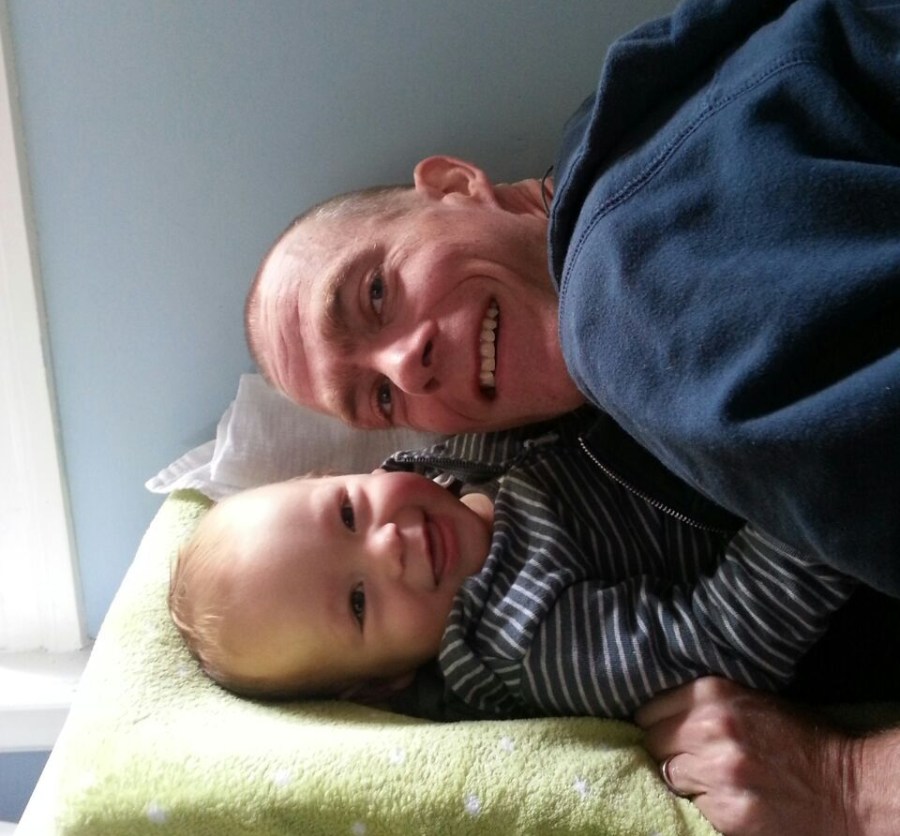
OMG, I can’t believe I survived that

For someone who was only used to going to a hospital when he had broken another bone, the first months after diagnosis were intense. While still trying to come to grips with the situation, the medical train had already left the station and was gathering speed.

My wife and I are very grateful for our aunties that stepped up and helped us through these months. Some of them retired nurses, they explained what the doctors were talking about. They familiarized us with the medical system and how to navigate it, made us aware that we needed to be more vocal and definitely push for explanations when we didn’t understand or when something wasn’t happening the way we wanted.

After a few weeks, surgery was deemed impossible, even by the Stanford surgeon nicknamed “the cowboy” because he did things others couldn’t or didn’t dare to. The recommended treatment by the experts from the University of Michigan was chemotherapy. As much as that frightened me, I trusted Dr. Hammer (and still do). We got off to a great start when we met him. He pulled up a chair, sat right in front of me, looked me in the eye and asked: “So, what kind of work do you do?”. I answered, “I’m an engineer”. He turned to Martine, asked the same question and got the same answer. To which his response was: “All right, let me start by saying that you’re NOT a statistic. You’re a person and any outcome is still possible. You understand?”. We all laughed. Nice reputation we engineers have!

The first-line chemo consisted of three different types of which the oncologist said: “we’re going to hit the cancer as hard as we can”. She also could have said that they would try to kill the cancer before they would kill me… the chemo was tough.

Vomiting, nausea, ER visits, loss of appetite, nothing but dry rice for a week and hair loss. I was convinced this was going to work. Until after two months (i.e. two cycles) the scan showed that the chemo had done nothing. Really?? Did I survive all of that for nothing?
 

The day my world stopped turning

June 21st 2014 was the day that my life completely changed. Suddenly everything we built, planned and dreamed; was gone. When you see a doctor with an ash-grey face, you know sh*t is going to hit the fan and it did. Honestly, I fainted and it took me several months to realize what happened. I need to say it out loud: I have a very rare form of cancer with no known treatment.

The first few days were a blur. The only thing I can remember was my oncologist telling me that she didn’t know this disease either, but that we would figure it out together. At least she was honest!

Apart from that, there were many “first’s”. My first nights in a hospital, my first CT (immediately followed by second and third), my first biopsy (oh my, what is that needle long) and my first taste of a hospital meal… I also had my first laugh again. While showing me a video on how to inject the blood thinners (brand name Lovenox), the nurse remarked that it had to be injected in fatty tissue. “Very easy to remember,” she said, “as it sounds like ‘Love handles’ and everyone has those!” Martine (my wife), Cathy (our aunt) and I couldn’t control ourselves and had to laugh. The nurse looked at me and said: “Oh, you don’t really have those”.

A lot of doctors stopped by. They all lost me after “hi, how are you feeling?”; their language and vocabulary were one big mumbo-jumbo of unknown words. The only things going through my mind were an infinite amount of questions: What happened? What caused this? Too much stress? Why me? What have I done wrong? Am I going to die soon?

I wanted to get out of this parallel universe, back to my normal life and most of all: I wanted to go home..

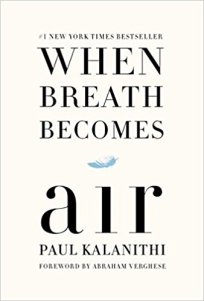
When Breath Becomes Air – Paul Kalanithi

WhenBreathBecomesAirSummary by Amazon.com:

At the age of thirty-six, on the verge of completing a decade’s worth of training as a neurosurgeon, Paul Kalanithi was diagnosed with stage IV lung cancer. One day he was a doctor treating the dying, and the next he was a patient struggling to live. And just like that, the future he and his wife had imagined evaporated. When Breath Becomes Air chronicles Kalanithi’s transformation from a naïve medical student “possessed,” as he wrote, “by the question of what, given that all organisms die, makes a virtuous and meaningful life” into a neurosurgeon at Stanford working in the brain, the most critical place for human identity, and finally into a patient and new father confronting his own mortality.

What makes life worth living in the face of death? What do you do when the future, no longer a ladder toward your goals in life, flattens out into a perpetual present? What does it mean to have a child, to nurture a new life as another fades away? These are some of the questions Kalanithi wrestles with in this profoundly moving, exquisitely observed memoir.

Paul Kalanithi died in March 2015, while working on this book, yet his words live on as a guide and a gift to us all. “I began to realize that coming face to face with my own mortality, in a sense, had changed nothing and everything,” he wrote. “Seven words from Samuel Beckett began to repeat in my head: ‘I can’t go on. I’ll go on.’” When Breath Becomes Air is an unforgettable, life-affirming reflection on the challenge of facing death and on the relationship between doctor and patient, from a brilliant writer who became both.

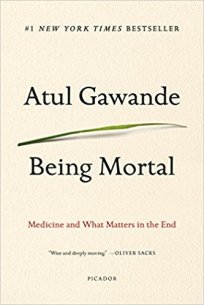
Being Mortal – Atul Gawande

BeingMortal

Summary from Amazon.com:

Medicine has triumphed in modern times, transforming the dangers of childbirth, injury, and disease from harrowing to manageable. But when it comes to the inescapable realities of aging and death, what medicine can do often runs counter to what it should.

Through eye-opening research and gripping stories of his own patients and family, Gawande reveals the suffering this dynamic has produced. Nursing homes, devoted above all to safety, battle with residents over the food they are allowed to eat and the choices they are allowed to make. Doctors, uncomfortable discussing patients’ anxieties about death, fall back on false hopes and treatments that are actually shortening lives instead of improving them.

In his bestselling books, Atul Gawande, a practicing surgeon, has fearlessly revealed the struggles of his profession. Now he examines its ultimate limitations and failures-in his own practices as well as others’-as life draws to a close. Riveting, honest, and humane, Being Mortal shows how the ultimate goal is not a good death but a good life-all the way to the very end.